
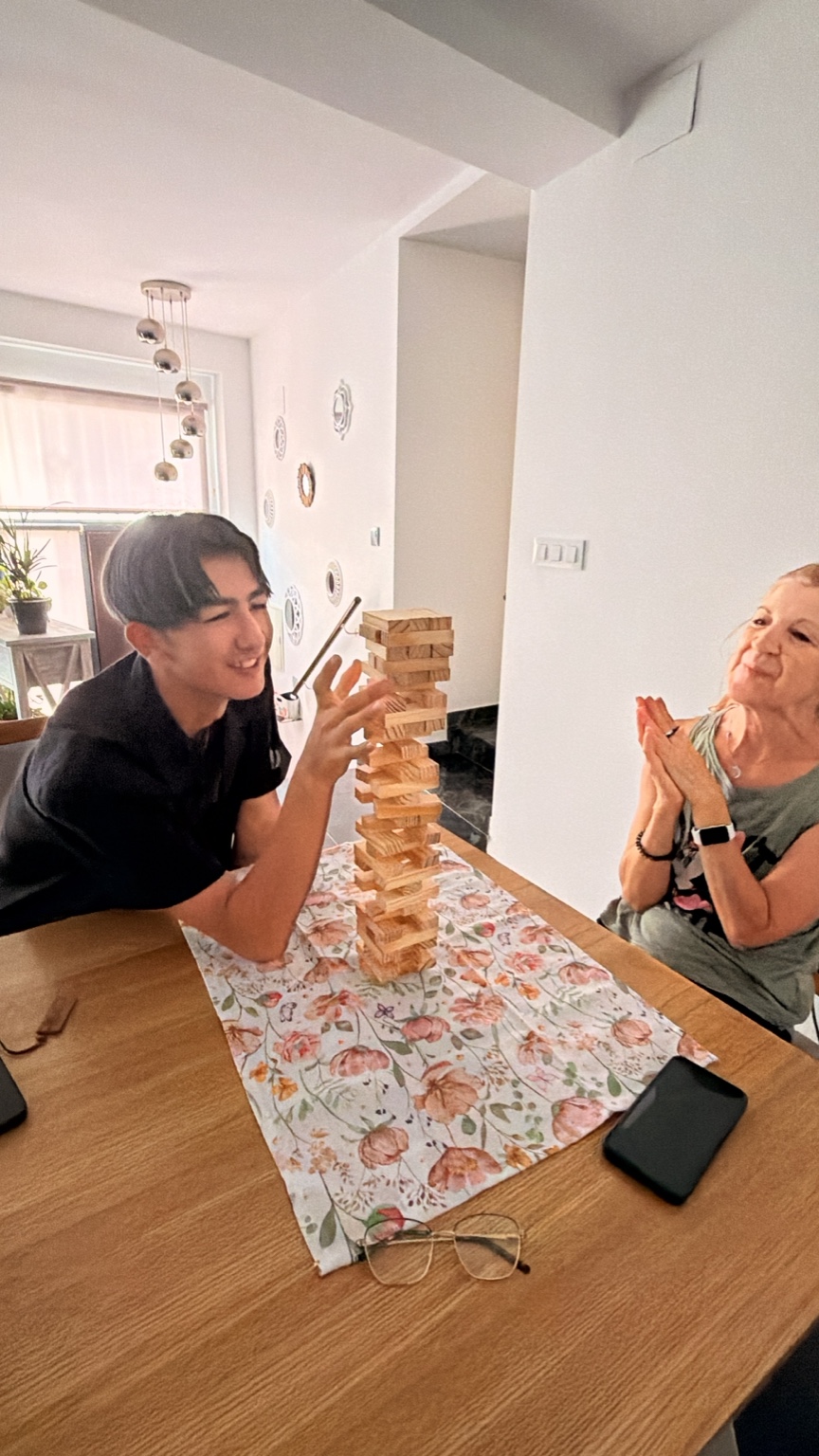
A few days in Villaharta, surrounded by family, nature, and little things I had not realised I missed so much.
Ángela found the home she had dreamed of and, without knowing it, created another place her brother can return to.
When a sister fulfils her dream
Some joys come not from something that happens to us, but from seeing someone we love achieve what they hoped for.
That is what I felt when I arrived in Villaharta and saw the life my sister Ángela has built with Antonio.
I had not simply come to see a house in a village. I had come to see my sister’s dream become real: a home of her own, peace, nature, a life shared with Antonio, and a small, welcoming village where they could enjoy a different way of living.
As I walked through the house and looked at each corner, one thought kept returning: “She did it.”
Ángela had achieved what she had dreamed of. Seeing her happy in the life she had chosen brought me a joy that is hard to explain.
Sometimes a house says far more than its walls can tell. It speaks of effort, choices, time, and everything a person has gone through before finally feeling they are where they belong.
Ángela’s house is more than a lovely house in Villaharta. It is the home she wanted to build. During these days, it also became a place where Teo and I were welcomed with enormous affection.
Villaharta: a village where people still greet you
One of the first things that struck me while walking through Villaharta was hearing people greet each other as they passed.
“Good morning.” “Hello.” “See you later.”
It may seem a small thing, but after so many years living abroad, these everyday gestures take on a special meaning.
I love Japan. I have built my life, my family, my work, and an essential part of who I am there. I do not need to compare the two places or decide that one culture is better than the other.
But there are things about Spain that I miss when I am in Japan. I am sure there would also be many things about Japan I would miss if I ever stopped living there.
After so many years, you discover that you can carry two cultures and two places in your heart without having to choose between them.
In Villaharta I rediscovered a way of connecting with people that I had known since childhood, but that is no longer part of my everyday life. Those greetings in the street reminded me that belonging can begin with something as simple as someone looking at you and saying, “Good morning.”
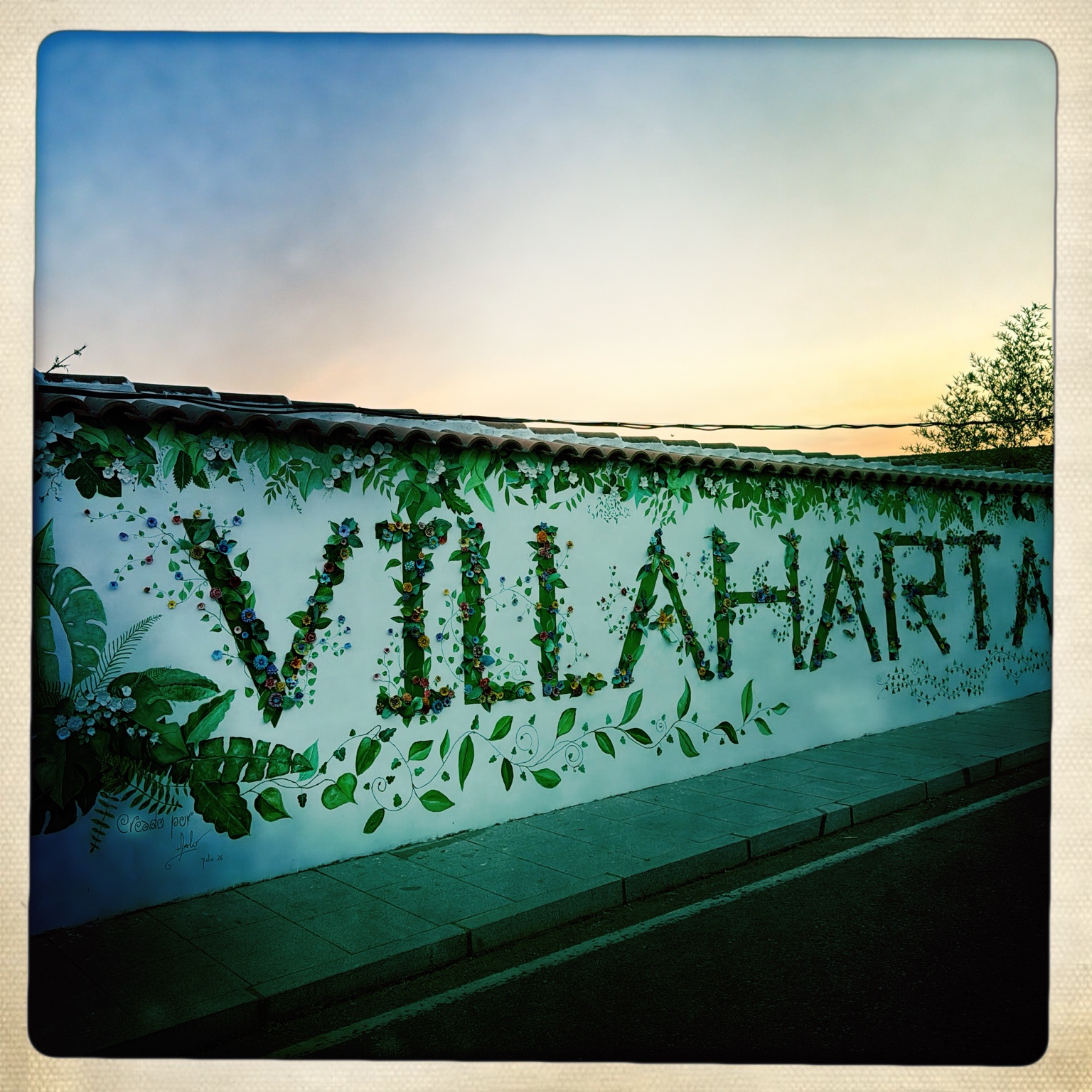
Villaharta, where peace is part of the landscape.
Affection needs no translation
One of the greatest gifts of these days has been seeing Teo spend time with Ángela and our Spanish family.
I have watched him play with his aunt, join the games around the table, listen to conversations, laugh, and share family moments, even though he does not yet understand all the Spanish.
Once again, I have seen something very simple: affection needs no translation.
Teo grew up in Japan and has not been able to share many of these everyday moments with his Spanish family. For him, this trip is about more than discovering new places. It is also the beginning of memories he has not previously had the chance to make.
A laugh with his aunt. A game together. A conversation in which he may not understand every word, but does understand the tone, the joy, and the affection.
Some bonds are not built by explaining them. They are built by being together.
I think that in a few years Teo may not remember every conversation from these days. But he will remember how it felt to sit around that table, how he played with Ángela, and how a family he does not see every day welcomed him as though time and distance did not matter.
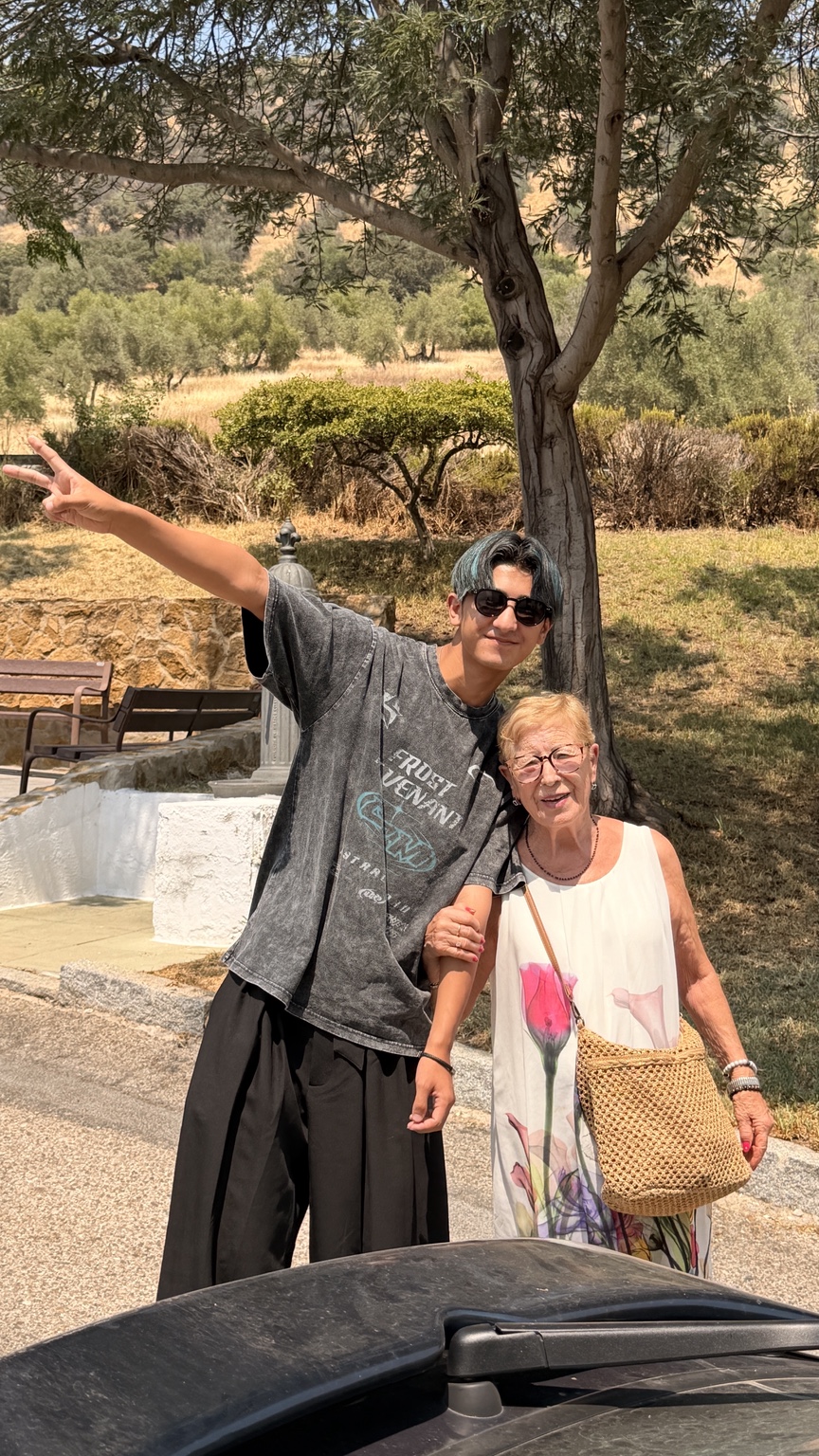
Teo and his grandmother during those days in Villaharta.
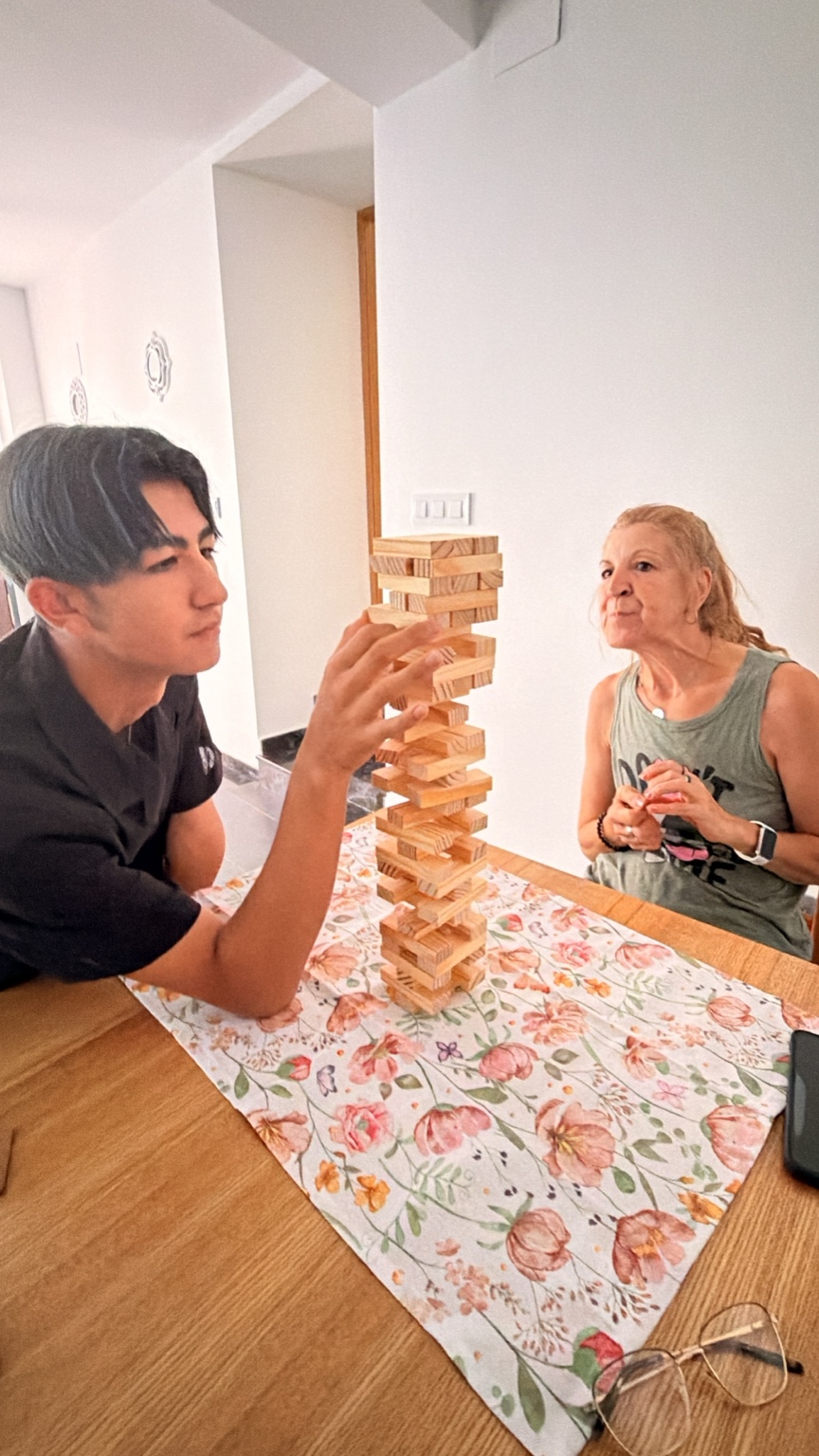
Teo and Ángela sharing one of the games we played during those days.
A home filled with life
During these days, Ángela’s house was full of scenes that feel ordinary while they are happening, but become precious when you have spent many years living far away.
The table laid. Home-cooked food. Conversations continuing after the meal. Ángela, Antonio, my mother, Teo, and me sharing the same space, with no need for anything extraordinary to happen.
After so many years abroad, some of the things you miss most are not the big occasions. They are a family table, a conversation that goes on, and knowing you do not have to rush off anywhere.
Ángela and Antonio’s hospitality made us feel we were more than visitors. They let us into their daily lives, shared their home, and made us feel that we belonged there too.
A house becomes a home when it begins to fill with life. During these days, theirs was full of family, games, meals, conversations, and laughter.
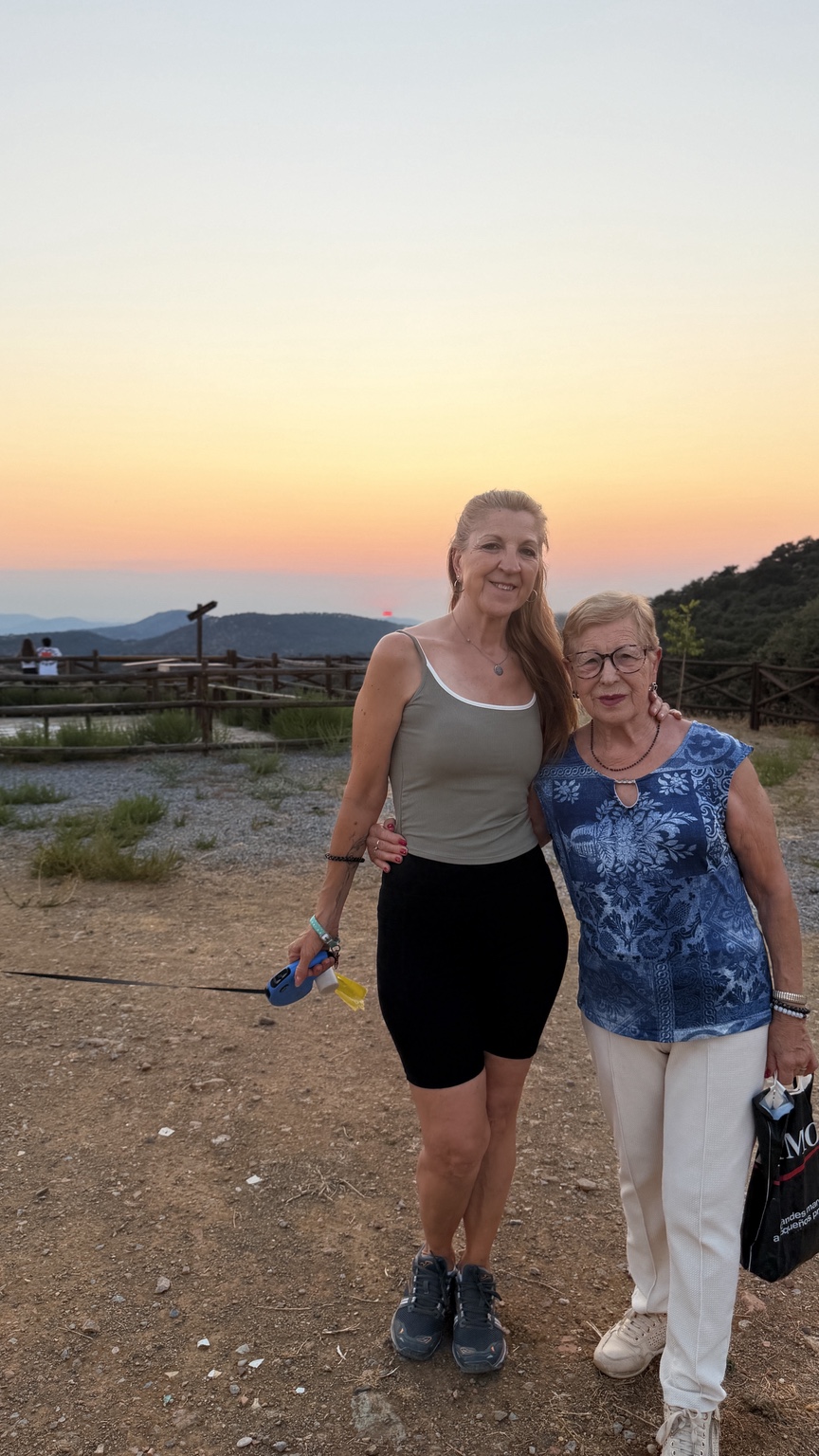
Ángela and my mother together at sunset in Villaharta.
A small village can hold great stories
Ángela and Antonio also helped us discover Villaharta.
Walking through the village and its surroundings, we found places that made me look more closely at it.
One was El Rey de la Cetrería, a sculpture by Aurelio Teno in the cemetery. Encountering this work of art there added another dimension to our walk. I was discovering not only the place where my sister lives, but also some of the culture and memory held within the village.
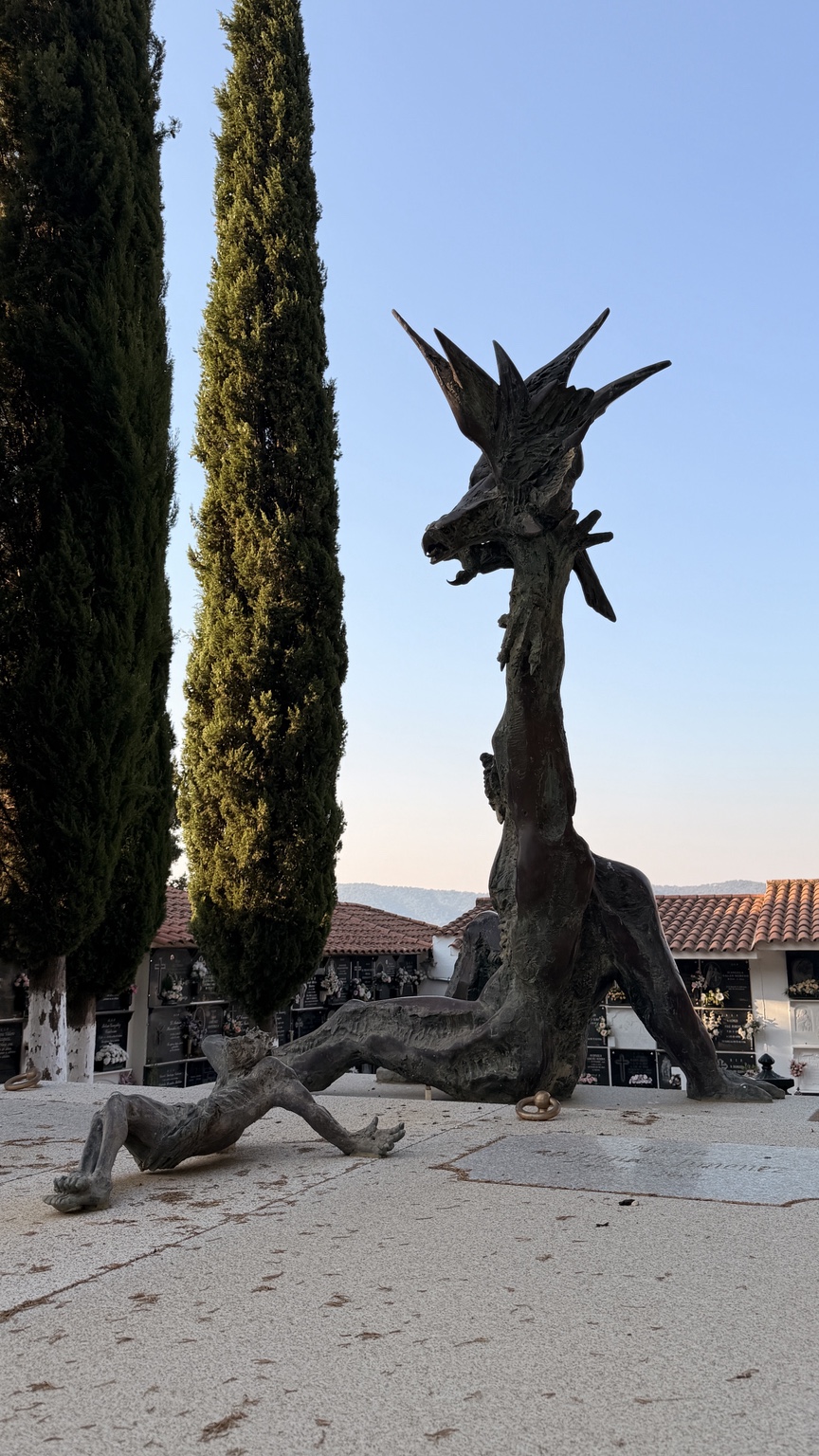
Aurelio Teno’s work in the cemetery of Villaharta.
You do not need to turn that moment into a long history lesson to understand its importance. It is enough to stop before the plaque, read the names, and remember that each belonged to a life.
A small village can hold great stories: stories of art, migration, suffering, memory, and people whose impact reached far beyond the place where they were born.
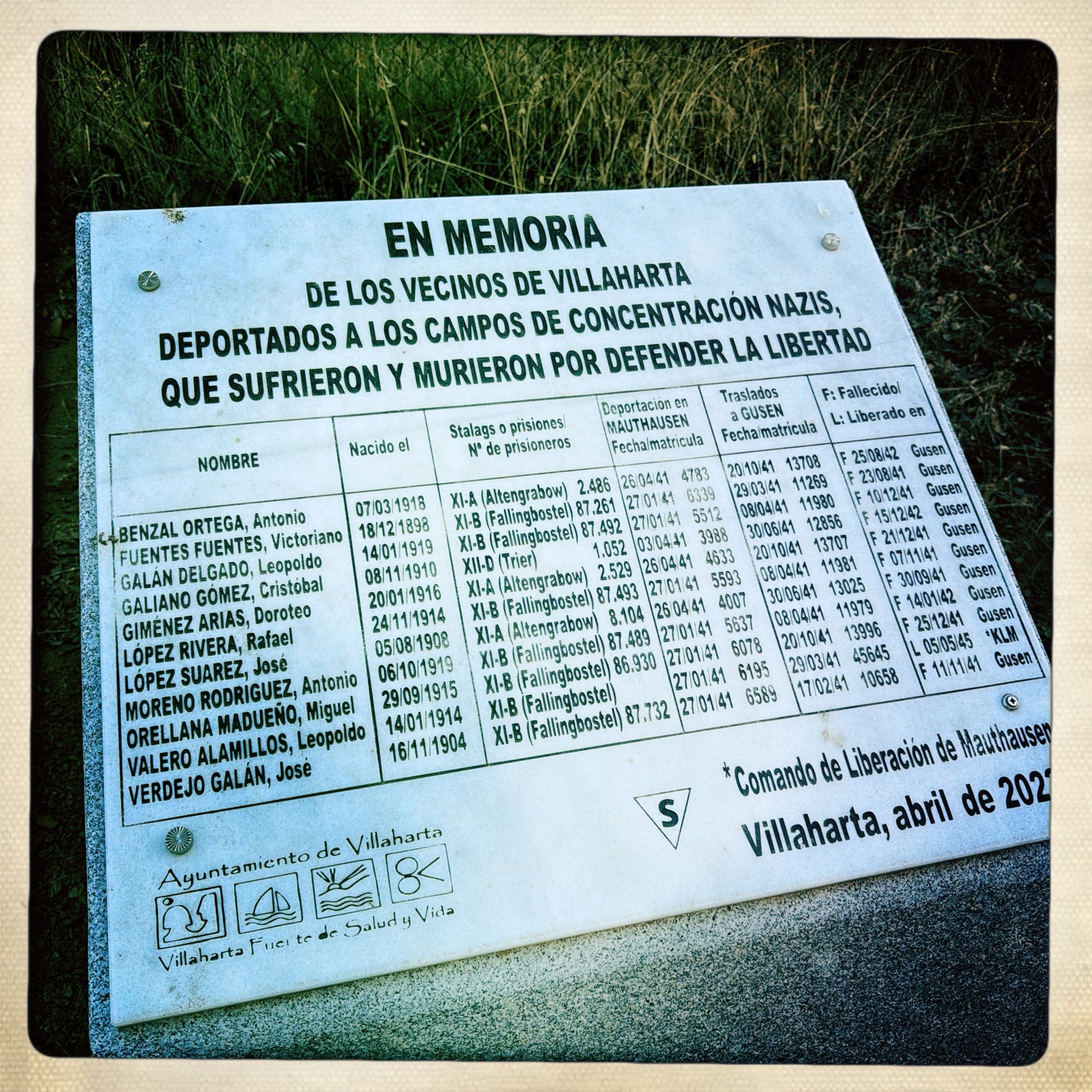
Memorial to the residents of Villaharta deported to Nazi concentration camps.
The Virgen de los Emigrantes
Of all the places I found during those days, perhaps the Virgen de los Emigrantes—the Virgin of Emigrants—spoke to me most directly.
I am an emigrant too.
I left Córdoba when I was very young and built my life in Japan. I have lived there for decades, raised a family, developed my work, and learned to see the world through another culture.
But leaving does not mean erasing the place you come from.
Córdoba is still within me. It is in the way I speak, the way I feel, my work, flamenco, and many things that perhaps only become visible when I return.
Standing before the Virgen de los Emigrantes, I thought of all those who once had to leave or chose to find their path far from home. I also thought about how strange it can feel to return after so many years: to recognise your homeland and, at the same time, see it through different eyes.
Returning does not mean going back to exactly the place we left. We have changed. The people who stayed have changed too. Families have carried on with their lives and built new homes.
Perhaps that is why this trip matters so much to me. I am not returning only to my memories. I am also discovering everything new that has grown while I was living far away.
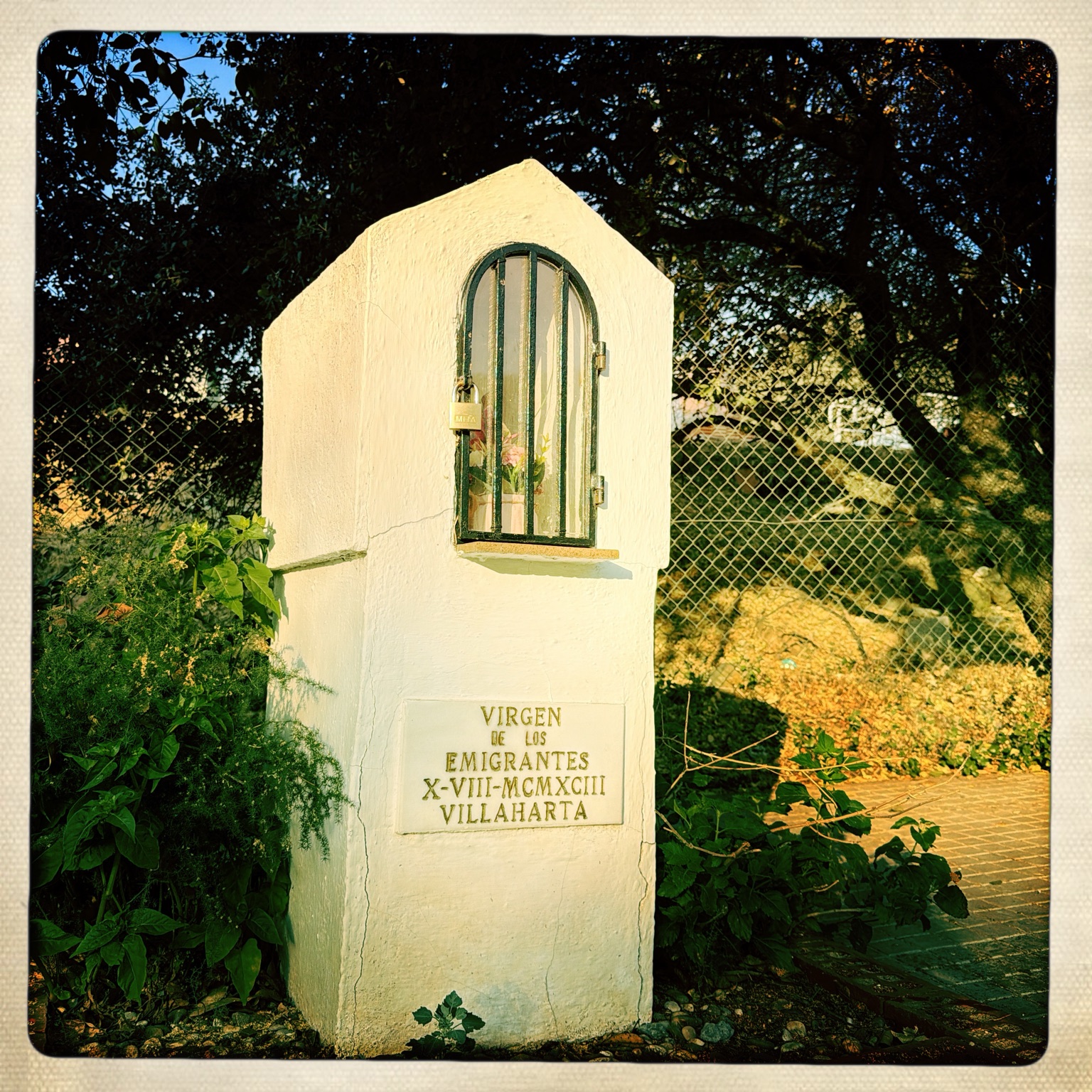
The Virgen de los Emigrantes, one of the places that spoke to me most directly.
A supermarket and an unexpected kind of nostalgia
One of the most ordinary moments of these days was our visit to Carrefour with Ángela, Antonio, my mother, and Teo.
I never thought I would one day miss a supermarket.
But perhaps it was not the supermarket I missed. I missed walking down an aisle and understanding everything effortlessly.
Reading every product name automatically. Understanding the ingredients. Knowing what something is for. Recognising foods, smells, packaging, and brands that were part of my childhood.
There were Cuétara’s TostaRica biscuits, the large packs of ColaCao, ham, chorizo, magdalena cakes, sweets, cosmetics, and so many everyday products that once would have passed completely unnoticed.
After so many years in Japan, however, I was looking at them differently.
Not because I lack anything in Japan or reject the life I have built there. Quite the opposite: Japan is my home and part of who I am.
But reading every label without concentrating, understanding every nuance immediately, and recognising products connected to my earliest memories awakened a nostalgia I had not expected.
Sometimes you discover how much you miss your homeland while looking at something as simple as a packet of magdalena cakes.
That visit reminded me that identity also lives in little things: flavours, supermarket aisles, the brands we saw as children, and the feeling of understanding your surroundings without having to translate them in your head.
Looking up at the sky together
Those days also gave us moments we had not planned.
We watched for the eclipse and waited during the night for the Perseids, surrounded by Villaharta’s peace and nature.
We did not need to turn it into a big activity or know everything about the sky. What mattered was being there: sharing the wait, looking up, and feeling that for a few moments we were all watching for the same thing.
Some memories are planned for months. Others simply appear, and you have to be there to receive them.
Perhaps, with time, these will be the moments that return most clearly: a night looking at the sky, a conversation around a table, or a quiet street where someone wished us good morning.
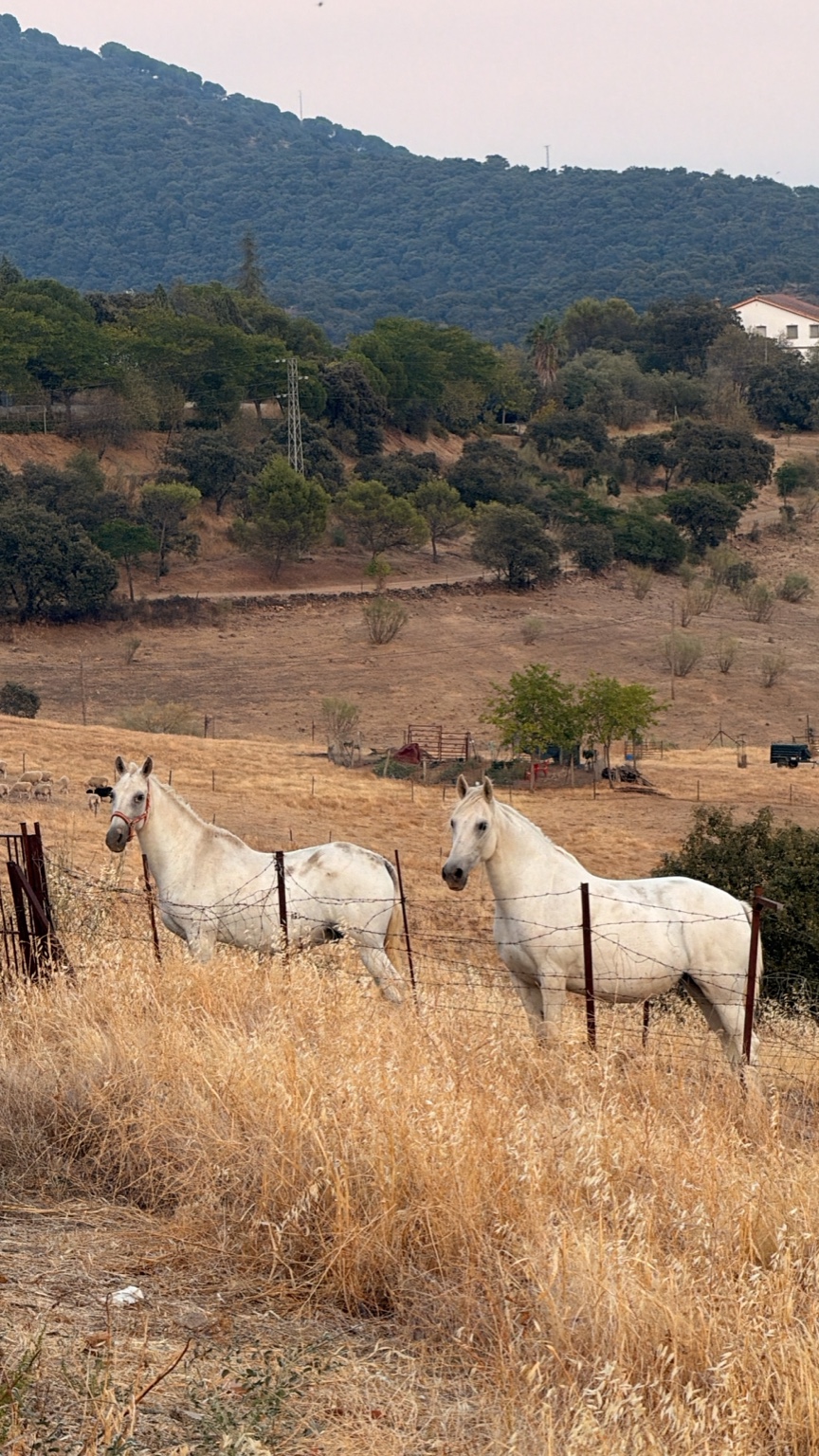
Villaharta’s natural surroundings, with hills and horses.
Another place to return to
Today I am leaving Villaharta and going back to my mother’s house.
I leave happy, having seen that my sister has found the place she dreamed of for so long.
I carry with me the affection with which Ángela opened her home to us, the laughter shared with Teo, and my gratitude to Antonio for his hospitality and for making us feel part of that home.
While I was building my life far away, the people I love were continuing to build theirs.
When I returned, I discovered new places waiting for me.
Ángela did more than open the door of her house. She let me feel once again that I was a brother, a son, and part of a family.
Ángela found the home she had dreamed of and, without knowing it, created another place her brother can return to.
AlitaDePollo
Credits
Text: Benito García · Editorial signature: AlitaDePollo
Photographs: Benito García’s family archive.
Main location: Villaharta, Córdoba.
People mentioned: Ángela, Antonio, Teo, and Benito’s mother.